Posts

Showing posts with the label Indian culture

The Other Sanskritization

Eminent sociologist Professor M.N. Srinivas coined the term "Sanskritization" to describe the cultural mobility in the traditional caste structure of Indian society. To raise their status in the traditional hierarchy of society, lower castes imitated the ways of the upper castes and in the process, quit some of their "impure" ways to assimilate well. This assimilation continued throughout. During the British rule, several reform movements took place. When the reigns of these movements fell into the hands of the lower caste leaders, they questioned the need for the lower castes to imitate the ways of upper castes and rightly so. By blindly aping the ways of the upper rungs of the society, you also acknowledge their justification for being the upper class in the first place. I believe readers would agree with me here for the most part. Now that we have these ideas on the table, let's move to what's called westernization. With the advent of Europeans in ...
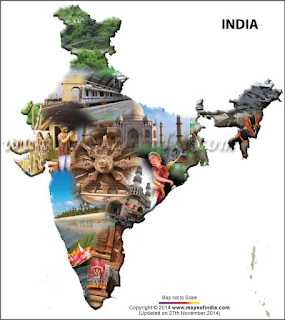
The story of Indian Culture

Image
Often these days, there is a war cry to save Indian Culture, to diss "foreign" rulers, to purify the culture. On one of the unfortunate days, I gave it a thought and was left wondering about what Indian culture is! Is it today's culture which is apparently influenced by western culture and has lead to movements to pursue equality among different sections or when it has lead to affect the customs like respecting elders, taking care of old parents? Nah, this doesn't make sense. This includes adulterations. This isn't the Indian culture we talk about.  Then is it what we had when British left? The social traditions of untouchability, child marriage, limitations on women, a rigid caste system? But this system had the traditions of taking care of old parents intact. Nah, this doesn't sound like the golden India either. There are so many social evils in this period. Let's backdate again. It must be the era when Mughal power was declining and ...

Chronicles of India: Sair-e-Gulfaroshan

Image
Sair-e-Gulfaroshan This is one of the most iconic symbol of  communal harmony  in India but unfortunately, not many people know about it. The festival is also known as “Phoolwalo ki sair” (English: Procession of those carrying flowers). It is the annual festival of flowers conducted in Old Delhi.  The event involves a procession led by  shehnai  players bearing floral  pankhas, chadars and chhatras.  These are offered at the ancient  Devi Yogmaya Temple  and the  Dargah of Khwaja Qutbuddin Bakhtiar Kaaki  in Mehrauli. The festival owes its origin to Queen Mumtaz Mahal who was the wife of Mughal Emperor Akbarshah II.  It was stopped by the British but was reinstated in 1962 and has been celebrated ever since then with celebrations getting pompous each year. "Out  of clutter, find simplicity." - Albert Einstein

Chronicles of India: Auroville

Image
There  exists a township in India  which  envisages the idea of a world without boundaries . Auroville Township Auroville  ( City of Dawn ) is an experimental township in Viluppuram district mostly in the state of Tamil Nadu with some parts in the Union Territory of Puducherry in South India. It was founded in 1968 by  Mirra Alfassa (known as "the Mother")  and designed by architect Roger Anger. As stated in Alfassa's first public message in 1965, she states, that  Auroville is meant to be a universal town where men and women of all countries are able to live in peace and progressive harmony, above all creeds, all politics, and all nationalities. The purpose of Auroville is to realize human unity.  The city is dedicated to the vision of Sri Aurobindo. Currently, it is managed by Auroville Foundation and  over 2400 people from as many as 50 nations live in Auroville.  It is recognized as International living experiment in hu...